Source 2 stroke racing dirt bike for Off-road, Track, and Trail Riding
Compare 17 available 2 stroke racing dirt bike options with varying engine sizes and specifications. Buyers can evaluate models from Zhejiang and Chongqing suppliers to find the right machine for off-road, track, or trail riding applications.
Key considerations
Products List


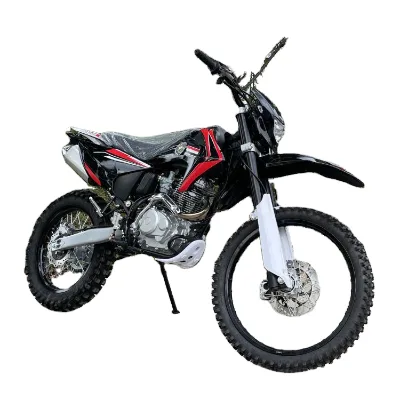


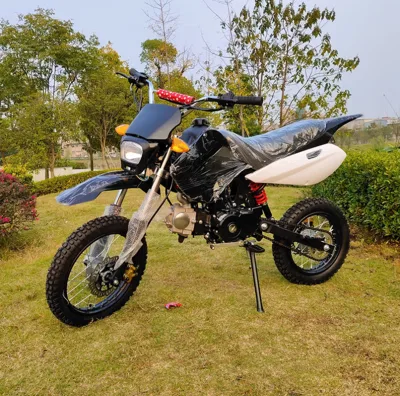

Comprehensive Sourcing Guide
Strategic Sourcing Guide for 2 Stroke Racing Dirt Bikes
The global market for off-road motorcycles has seen a sustained demand for high-performance, lightweight machines, with the 2-stroke racing dirt bike remaining a niche but critical segment for competitive riders and specialized fleet operators. Sourcing these vehicles requires a disciplined approach that balances raw performance metrics with rigorous supply chain verification. Unlike general utility motorcycles, racing variants demand specific attention to engine architecture, weight distribution, and regulatory compliance. This guide synthesizes observed market data and technical attributes to provide a framework for procurement professionals seeking to acquire 2-stroke racing dirt bikes, ensuring that decisions are grounded in verifiable facts rather than speculative marketing claims.
Technical Architecture and Engine Specifications
The defining characteristic of a 2-stroke racing dirt bike is its engine cycle, which delivers a power-to-weight ratio that is often superior to 4-stroke counterparts in the same displacement class. When evaluating potential inventory, buyers must verify the specific cylinder configuration and displacement range. Observed market data indicates a prevalence of 2-stroke engines in this category, with specific models featuring displacement figures such as 224cc. The internal geometry of these engines is critical; for instance, a bore and stroke configuration of 66.8mm by 64mm is a documented specification for high-output 2-stroke units in this sector.
Performance metrics for these engines are typically quantified by maximum power and torque output. A 224cc 2-stroke engine may deliver a maximum power of 26kW at 8000r/min and a maximum torque of 30N·m at 7500rpm. These figures suggest a power band that peaks at higher RPMs, a characteristic typical of racing engines designed for track use rather than low-end torque for trail riding. Buyers should also note the fuel system requirements; while some models operate on Gas/Diesel blends, racing dirt bikes in this segment are almost exclusively gasoline-fueled. The fuel tank capacity observed in similar high-performance units can be as low as 1.3L, necessitating a procurement strategy that accounts for frequent refueling or the inclusion of auxiliary fuel systems for extended race durations.
Furthermore, the ignition system is a vital component of the engine's reliability. Capacitor Discharge Ignition (CDI) systems are standard in this category, providing the precise spark timing required for high-revving 2-stroke engines. The electrical system often relies on a 12V 4Ah battery, which is lighter than the 12V 7Ah units found in larger displacement or 4-stroke competitors. This weight reduction is intentional, as every gram saved contributes to the bike's agility on the track.
Compliance, Certification, and Regulatory Standards
Navigating the regulatory landscape is essential for international procurement. The primary certification observed in the supply chain for these vehicles is the CE mark. This certification indicates conformity with health, safety, and environmental protection standards for products sold within the European Economic Area. However, the presence of a CE mark on a product listing does not automatically guarantee that every unit in a shipment meets the same rigorous testing protocols. Buyers must verify that the specific batch they intend to purchase includes valid certification documentation that matches the model number, such as the DB-X12 or KR5 250PR-2.
In addition to CE certification, dimensional standards play a crucial role in compliance and logistics. The physical footprint of these bikes varies significantly based on the model. For example, specific racing models adhere to standard dimensions of 1155mm by 375mm by 635mm, while larger variants may reach 2140mm in length, 815mm in width, and 1260mm in height. These dimensions are not merely aesthetic; they determine shipping container utilization and compliance with local road or track width restrictions.
Buyers must also scrutinize the origin of the product. The supply chain for these motorcycles is heavily concentrated in specific manufacturing hubs in China, with Zhejiang and Chongqing identified as key production locations. While these regions are known for their motorcycle manufacturing capabilities, the specific origin can impact shipping costs, lead times, and the applicability of certain trade agreements. It is imperative to confirm the "Place of Origin" on the commercial invoice matches the supplier's declared location to avoid customs discrepancies.
Cost Drivers and Pricing Dynamics
The pricing structure for 2-stroke racing dirt bikes is influenced by a complex interplay of factors, including engine displacement, customization options, and packaging requirements. The observed market price range for these units spans from $120 to $3,500 USD. This wide variance suggests that the market includes both entry-level recreational models and high-end, competition-ready racing bikes. The lower end of the spectrum likely corresponds to basic models with standard specifications, while the upper end reflects units with enhanced performance tuning, premium components, and specialized racing features.
A significant cost driver is the customization capability. Many suppliers offer "Available" customization options, which can range from color schemes and graphics to mechanical upgrades like different sprocket ratios or suspension tuning. These customizations add value but also increase the unit cost and potentially the lead time. Buyers should clearly define their customization requirements in the purchase order to avoid unexpected price escalations.
Packaging is another critical cost factor. High-performance racing bikes often require robust protection during transit to prevent damage to delicate components like the exhaust system, suspension forks, and bodywork. The use of wooden boxes is a documented standard for certain models, such as the KR5 250PR-2. While wooden crates provide superior protection, they are heavier and more expensive to ship than standard cardboard or plastic packaging. Procurement teams must calculate the total landed cost, including freight, insurance, and customs duties, rather than focusing solely on the ex-works price.
Supplier Evaluation and Geographic Considerations
When evaluating suppliers, buyers should prioritize those with a verifiable track record in the specific manufacturing hubs identified in the market data. The concentration of production in Zhejiang and Chongqing suggests a mature supply chain with established logistics networks. However, the existence of a manufacturing location does not guarantee quality. Buyers must conduct due diligence on the supplier's production capacity, quality control processes, and ability to meet Minimum Order Quantity (MOQ) requirements.
The observed MOQ range for these products is between 1 and 100 units. This flexibility allows buyers to test the market with small orders or scale up for larger fleet acquisitions. However, suppliers with lower MOQs may charge a premium per unit, while those requiring higher volumes may offer more competitive pricing. It is essential to negotiate terms that align with the buyer's inventory strategy.
Furthermore, the condition of the product is a non-negotiable factor. All observed listings specify the condition as "New." Buyers must ensure that the contract explicitly states that the goods are brand new, factory-sealed, and free from any prior use or cosmetic damage. This is particularly important for racing bikes, where even minor wear can affect performance and safety.
Quality Control and Performance Verification
Quality control for 2-stroke racing dirt bikes must extend beyond visual inspection to include functional testing. Key performance indicators include the maximum speed, which can range from 61-80km/h for entry-level models up to 120km/h for high-performance racing variants. A specific model with a 249.9cc displacement has been observed to achieve a maximum speed of 107km/h, demonstrating the correlation between displacement and top speed.
Buyers should request detailed test reports or performance data sheets that verify these specifications. While the provided data lists specific metrics like a maximum speed of 120km/h and a net weight of 113kg, these figures should be treated as observations of specific models rather than universal guarantees for all 2-stroke bikes in the category. The tire specifications, such as 80/100-21 for the front and 110/90-18 for the rear, are also critical for ensuring the bike meets the traction and handling requirements of the intended racing surface.
Additionally, the ground clearance, observed at 320mm for certain models, is a vital safety feature for off-road racing. Buyers should verify that the clearance meets the requirements of the tracks or terrains where the bikes will be operated. The wheelbase, which can be as long as 1460mm, affects the bike's stability and turning radius, and should be matched to the rider's skill level and racing discipline.
Long-Term Procurement and Maintenance Considerations
Sourcing 2-stroke racing dirt bikes is not a one-time transaction but part of a long-term operational strategy. Maintenance requirements for 2-stroke engines are distinct from 4-stroke engines, often requiring more frequent oil changes and fuel mixture adjustments. The engine oil capacity for a 224cc 2-stroke unit is observed to be 0.8L, which is significantly lower than the 1.1L capacity found in some 4-stroke counterparts. This difference impacts the frequency of maintenance intervals and the volume of spare parts required.
Buyers should establish a relationship with suppliers who can provide a steady stream of spare parts, including pistons, rings, and gaskets, which are high-wear items in 2-stroke engines. The availability of these parts is crucial for minimizing downtime during racing seasons. Furthermore, the battery type, typically a 12V 4Ah unit, should be compatible with standard charging equipment to ensure reliability.
Finally, the condition of the bike upon arrival must be meticulously documented. Any discrepancies between the ordered specifications and the delivered product should be addressed immediately. By maintaining a rigorous approach to procurement, quality control, and supplier evaluation, buyers can secure a reliable supply of high-performance 2-stroke racing dirt bikes that meet the demanding standards of competitive motorsports.
FAQs
What certifications do these 2 stroke racing dirt bikes have?
The observed products carry CE certification, indicating conformity with European safety standards. Buyers must verify that the specific batch includes valid documentation matching the model number like DB-X12 or KR5 250PR-2 to ensure compliance.
Which engine specifications are available for 2 stroke racing dirt bikes?
Available engines include 224cc displacement with a bore and stroke of 66.8mm by 64mm. These units typically deliver 26kW of power at 8000r/min and feature CDI ignition systems with 12V 4Ah batteries for high-revving performance.
Can I customize the 2 stroke racing dirt bikes I order?
Customization is available for many models, allowing for changes in color schemes or mechanical upgrades. Buyers should clearly define these requirements in the purchase order to avoid unexpected price escalations or extended lead times.
What is the price range for sourcing 2 stroke racing dirt bikes?
The market price range spans from 120 to 3500 USD depending on the model and features. Entry-level recreational models sit at the lower end while high-end competition-ready bikes with enhanced tuning command the higher prices.
Where are these 2 stroke racing dirt bikes manufactured?
Production is concentrated in manufacturing hubs in China, specifically Zhejiang and Chongqing. Buyers must confirm the Place of Origin on the commercial invoice matches the supplier's declared location to avoid customs discrepancies.
What are the packaging requirements for shipping these bikes?
High-performance racing bikes often require wooden boxes for robust protection during transit. This packaging is heavier and more expensive than standard options but prevents damage to delicate components like exhaust systems and suspension forks.
How does the engine oil capacity vary between models?
A 224cc 2-stroke unit typically has an engine oil capacity of 0.8L. This is significantly lower than the 1.1L capacity found in some 4-stroke counterparts, impacting the frequency of maintenance intervals and spare parts volume.